 Skip to content

Stonex, 25 years of precision cutting across quartz, porcelain & stone
Two house surface lines and a full range of natural stone: ST Quartz, ST Porcelain, and cut-to-order granite, marble, quartzite, onyx, and soapstone. Stonex is built on precision cutting and a hand-picked slab selection, with more than 25 years in the trade behind the name. We sell and install the range across the northwest Chicago suburbs.
Book Your Free Design Consultation
25+ Years in the trade
60,000+ Projects behind the name
2 House lines: quartz & porcelain
5 Natural stones, cut to order
Two house lines and a curated stone program
Stonex, known in full as Stonex Granite and Quartz, is a countertop brand built around two house lines and a curated stone program. ST Quartz is its engineered quartz, ST Porcelain is its large-format porcelain, and The Curated Collection gathers its most popular slabs in one place. Alongside those, Stonex works in granite, marble, quartzite, onyx, and soapstone.
The name is shared by a couple of unrelated products, so to be clear: this page is about Stonex Granite and Quartz, the countertop maker, not the Roca bath material that carries the same name.
Not Roca Stonex. Roca Stonex is a resin-and-mineral bath material for shower trays and tubs, made by the Spanish brand Roca. Different company, different product; the shared name causes a lot of mixed-up searches.
The surfaces we sell & install
What each Stonex line does
Engineered quartz, porcelain, and real quarried stone; one brand covers a low- maintenance kitchen or a statement island.
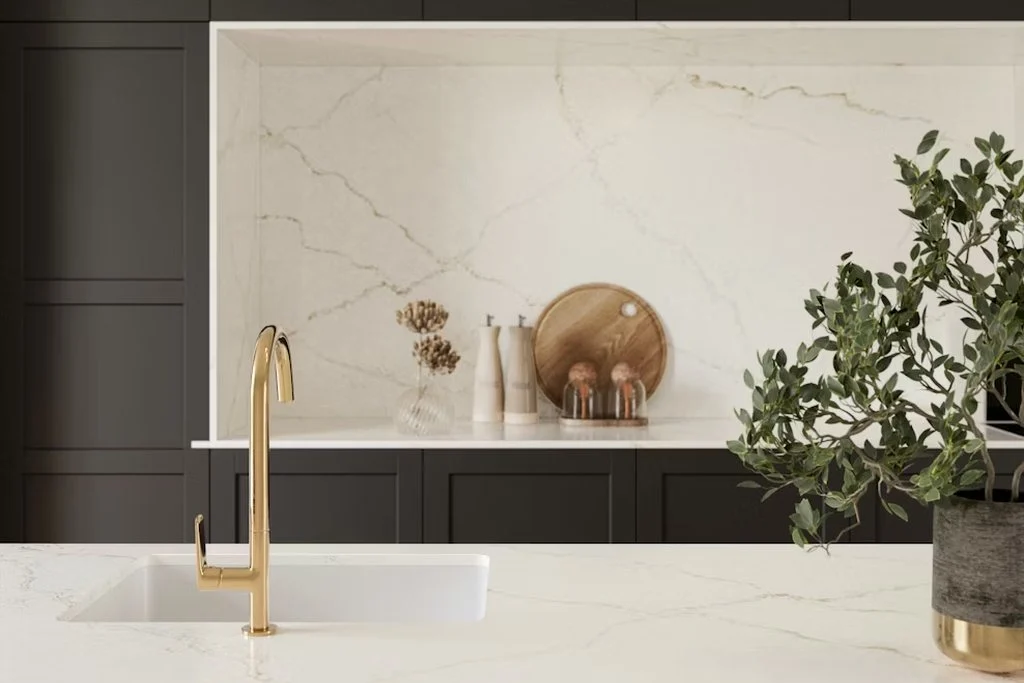
ST Quartz
Stonex's engineered quartz line, made from ground quartz with resins and pigments. It is non-porous, never needs sealing, and cleans with mild soap and water, which puts it on par with other name quartz for daily care. Like all quartz, it rates around 7 on the Mohs scale and resists scratches well, though it is not heatproof, so trivets belong on the counter. It suits indoor kitchens and bathrooms rather than sunny outdoor runs.
Hardness
~7 Mohs
Heat
Trivets required
Sealing
Never
Best for
Indoor kitchens & baths
ST Porcelain
Stonex's large-format porcelain line, a dense, non-porous surface fired at high heat. Porcelain takes hot pans better than quartz, resists UV, and holds up outdoors, which makes it the Stonex surface for a patio kitchen or a sunny room. Its thin, light build also works for waterfall island edges and tall backsplashes.
Great for

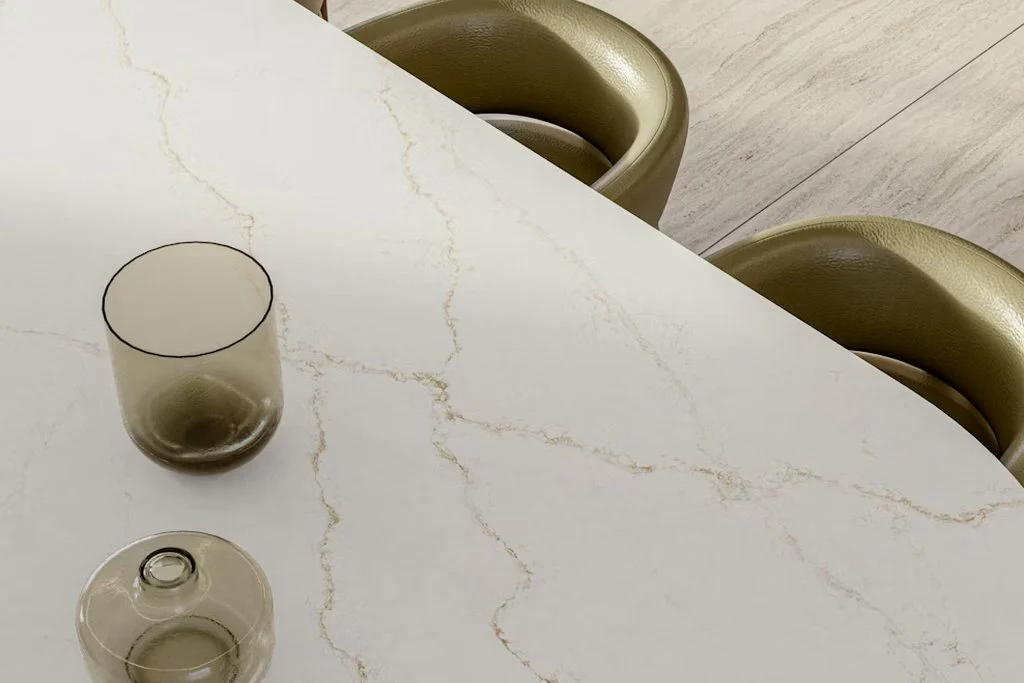
The Curated Collection
Stonex's hand-picked group of its most popular slabs, pulled from across its quartz, porcelain, and stone lines. It is a shortcut for buyers who want a strong starting point instead of the full catalog. Think of it as the greatest-hits shelf; if choosing from everything feels like too much, start here.
Natural stone
Where Stonex cuts real quarried slabs, each one unlike the next.
Granite
Hard and heat-tolerant; also handles sun.
Quartzite
The other hard, heat-tolerant pick that works outdoors.
Marble
Classic veining on a softer surface that wants more care.
Onyx
Translucent and often backlit for a statement island or bar.
Soapstone
Non-porous and very heat-resistant; oiled rather than sealed, and it darkens over the years.
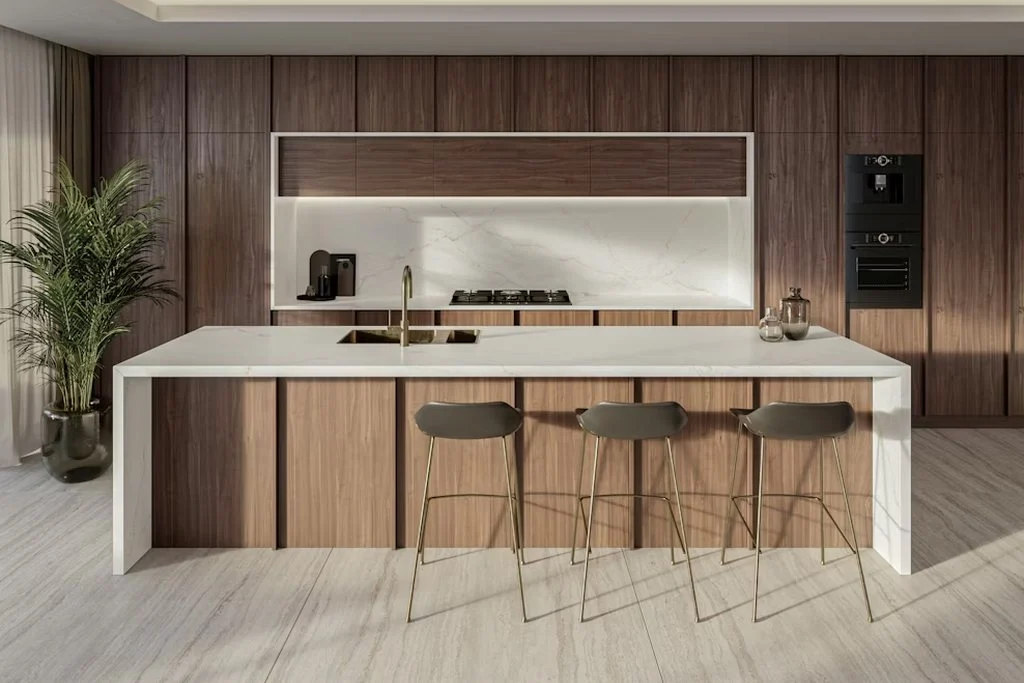
One name, three material types
Is Stonex sintered or composite stone?
Stonex is not a single material, so the answer depends on the line. ST Quartz is composite, or engineered, quartz held together with resin. ST Porcelain is porcelain, a fired ceramic that sits in the same family as sintered stone. The granite, marble, quartzite, onyx, and soapstone are natural quarried stone. One name covers three material types, which is why the question comes up so often.
Features and benefits by material
ST Quartz
Non-porous, no sealing, easy daily care, indoor use.
ST Porcelain
Heat- and UV-resistant, works outdoors, thin profile for waterfalls.
Granite & quartzite
Hard, heat-tolerant natural stone, sealed once a year.
Marble
Classic veining, softer surface, more care.
Onyx
Translucent, backlit statement pieces, best in low-traffic spots.
Soapstone
Non-porous and heat-resistant, oiled rather than sealed.
The right pick comes down to how you cook, how much upkeep you want, and where the counter goes.
How it stacks up
Stonex vs Silestone vs granite
A brand against a brand against a raw material, so it helps to separate them.
Silestone
A single engineered-quartz brand from Spain, known for tight color consistency.
Stonex
Sits across both worlds: ST Quartz competes with Silestone, while its stone program includes granite itself.
Granite
Natural stone, quarried in one-of- a-kind slabs, hard and heat- tolerant, with yearly sealing as the trade-off.
How to choose:
Compare the quartz lines head to head, then judge any granite slab on its own veining and price.
Why the crew matters
Most countertop problems start at the cut, not the slab
A weak spot near a sink cutout, a poorly placed seam, or porcelain handled without the correct blades can crack or chip months later. With any surface brand, the crew you hire decides how it holds up.
Every slab inspected
We inspect every Stonex slab on delivery and catch a flaw before it reaches your kitchen.
Right tooling, right seams
We cut with the right tooling, including porcelain- specific blades, and place seams where they belong.
One in-house crew
The same team handles both the cabinets and the counter, so everything under and on top lines up.
See them in person
Visit our Buffalo Grove showroom
Stonex countertops are easiest to judge with a real slab in front of you, and we keep samples at the showroom. Most of the northwest suburbs are a short drive from the shop.
Address
791 S Buffalo Grove Rd, Buffalo Grove, IL 60089
Hours
Mon–Sat, 10am–6pm
We serve
Buffalo Grove
Wheeling
Arlington Heights
Palatine
Vernon Hills
Lake Forest

Get In Touch
Stonex countertops are easiest to judge with a real slab in front of you, and we keep samples at the showroom. Most of the northwest suburbs are a short drive from the shop.
FAQs About Stonex Countertops
What are Stonex countertops?
Stonex — known in full as Stonex Granite and Quartz — is a countertop brand built around two house lines and a curated stone program: ST Quartz, ST Porcelain, and cut-to-order granite, marble, quartzite, onyx and soapstone.
What is the difference between ST Quartz and ST Porcelain?
ST Quartz is engineered quartz — ground quartz held together with resin, non-porous, never sealed, around 7 on the Mohs scale, and made for indoor kitchens and baths. ST Porcelain is a large-format fired porcelain that takes hot pans better, resists UV and holds up outdoors.
Is Stonex the same as Roca Stonex?
No. Roca Stonex is a resin-and-mineral bath material for shower trays and tubs made by the Spanish brand Roca. Different company, different product — the shared name causes a lot of mixed-up searches. This page is about Stonex Granite and Quartz, the countertop maker.
How does Stonex compare to Silestone or granite?
Silestone is a single engineered-quartz brand from Spain known for tight color consistency. Granite is a raw material quarried in one-of-a-kind slabs. Stonex sits across both worlds: ST Quartz competes with Silestone, while its stone program includes granite itself. Compare the quartz lines head to head, then judge any granite slab on its own veining and price.
Do Stonex countertops need sealing?
ST Quartz and ST Porcelain are non-porous and never need sealing — mild soap and water is enough. Natural stone from the curated program is sealed about once a year; soapstone is oiled rather than sealed.
Can Stonex countertops be used outdoors?
ST Porcelain is the outdoor line — heat- and UV-resistant, with a thin profile that also suits waterfall edges. ST Quartz is made for indoor kitchens and baths.
How much do Stonex countertops cost?
Stonex pricing depends on the line and the slab, so we quote the full figure after measuring — material, cutting and installation in one number, with nothing left to surprise you at the end.
What warranty comes with Stonex countertops?
Warranty terms vary by line. What matters as much as the paper is the cut: a weak spot near a sink cutout, a poorly placed seam, or porcelain handled without the correct blades can crack months later. We inspect every slab on delivery and cut with the right tooling, including porcelain-specific blades.