 Skip to content

| TL;DR — Quick Answer |
| Semi-custom kitchen cabinets are built to order within a manufacturer’s preset system, adjustable in size, finish, and accessories, but not made from scratch. |
| They cost $150–$700 per linear foot, with a standard 10×10 kitchen running $1,500–$7,000 depending on materials and upgrades. |
| Lead time is typically 4–8 weeks, faster than custom (8–16+ weeks), slower than stock (days). |
| The key advantage over stock: widths adjust in ½-inch or 1-inch increments rather than 3-inch fixed steps, reducing the need for filler strips. |
| ArtLine Kitchen & Bath in Buffalo Grove carries semi-custom lines from Fabuwood, ProCraft Milania, KraftMaid, and Bertch. |
Semi-custom cabinets occupy the middle of the three-category cabinet market, above stock in flexibility and below custom in cost and lead time. For most kitchen remodels in standard to slightly non-standard layouts, they deliver the best practical balance of personalization and budget. This guide covers what they are, what sets them apart from stock, how much they cost, and which brands to consider.
Table of Contents
ToggleWhat are Semi-Custom Kitchen Cabinets?
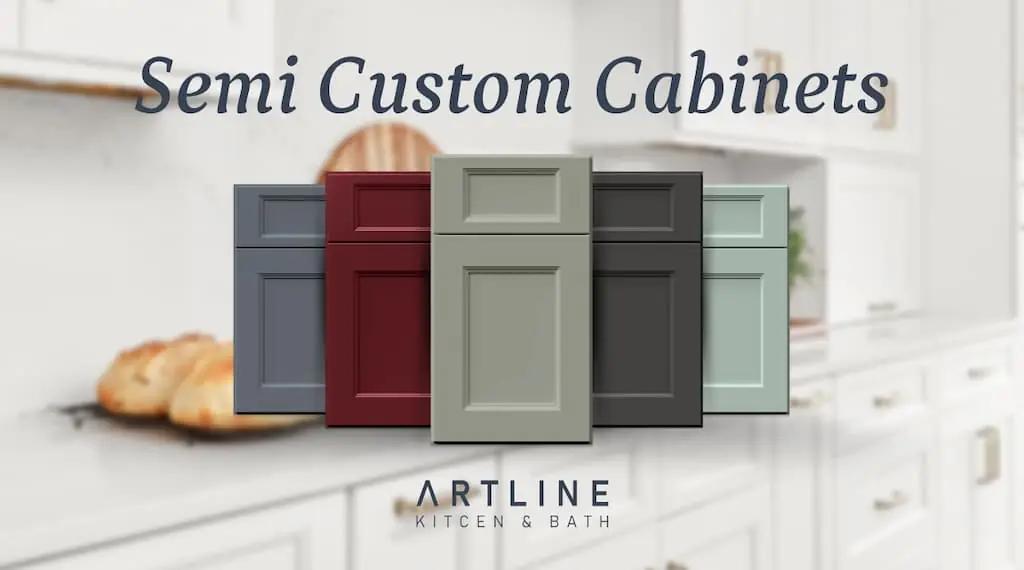
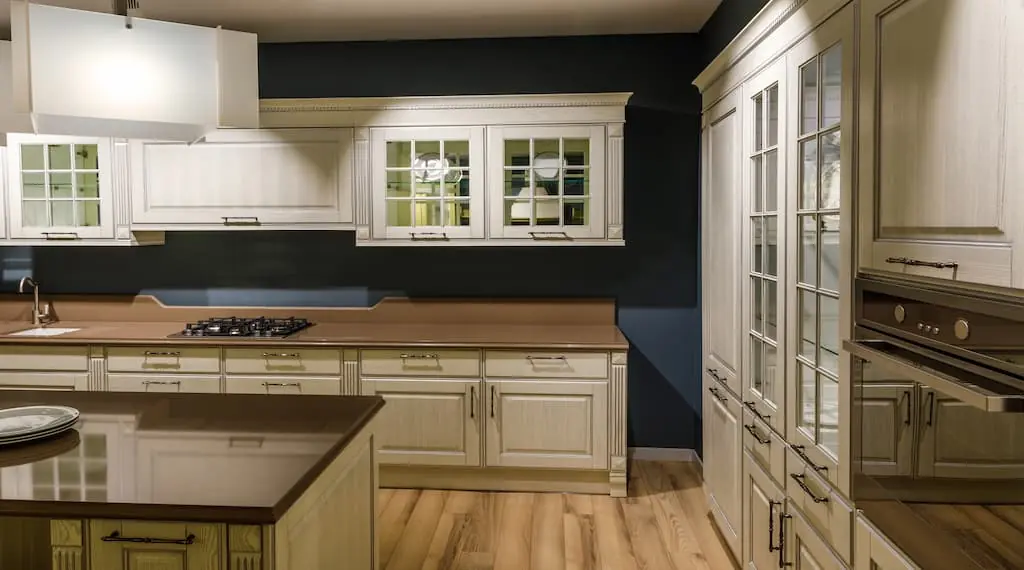
Semi-custom kitchen cabinets are factory-built units that start from standard sizes but allow modifications in dimensions, finishes, door styles, and interior features before manufacturing begins. They are not off-the-shelf like stock cabinets, nor built from scratch like custom cabinets.
In practical terms: the cabinet box is pre-engineered, but your order specifies the width, height, finish, door profile, and interior accessories from the manufacturer’s catalog. The manufacturer builds to your specs within their system’s limits.
The single most important difference from stock: stock cabinets come in 3-inch width increments (9″, 12″, 15″… up to 48″). Semi-custom cabinets adjust in ½-inch or 1-inch increments. That smaller increment means gaps at walls and corners are minimized or eliminated, reducing or removing the filler strips that make stock installations look less finished.
Pricing Guide for Semi-Custom Kitchen Cabinets
Semi-custom kitchen cabinets cost $150–$700 per linear foot, with a typical 10×10 kitchen (approximately 20 linear feet) running $3,000–$14,000 for cabinets and installation combined.
| Tier | Cost per Linear Foot | 10×10 Kitchen Estimate | Best For |
| Entry-level (basic finishes) | $150–$300 | $1,500–$3,000 | Rental, tight budgets |
| Mid-range (painted, soft-close) | $300–$500 | $3,000–$5,000 | Most home remodels |
| High-end (premium wood, accessories) | $500–$700+ | $5,000–$7,000+ | Long-term homes, luxury upgrades |
What Influences Semi-Custom Cabinet Pricing?
- Box material. Plywood boxes cost more than MDF or particleboard, and hold up significantly better in high-moisture kitchen environments.
- Finish type. Painted finishes (especially multi-step painted or glazed) cost more than standard stains. Specialty colors or color-matched paint add further.
- Interior features. Soft-close hinges and drawer slides, pull-out shelves, spice racks, and drawer organizers all add to the per-cabinet cost.
- Brand and manufacturer. KraftMaid and Bertch carry premium pricing due to US manufacturing and broader customization depth. Fabuwood and ProCraft Milania offer competitive mid-range pricing.
- Modification depth. Non-standard sizing, taller wall cabinets, custom-depth base cabinets, and specialty corner configurations add to the quote.
Materials and Construction Options for Semi-Custom Cabinets
The three most important construction factors to evaluate are box material, drawer joinery, and hardware, in that order of impact on long-term durability.
What are The Common Materials Used in Semi-Custom Cabinets?
- Plywood boxes (best choice): resist moisture and warping; hold screws more reliably than particleboard; standard in mid-range and upper semi-custom lines.
- MDF: dense and stable; excellent base for painted finishes; heavier than plywood and more sensitive to prolonged moisture exposure
- Maple: smooth grain, takes paint or stain cleanly; the most common solid wood species in semi-custom face frames and door fronts
- Oak: visible grain; common in traditional and rustic design directions
Construction Quality: Box, Joinery, and Drawers
- Dovetail drawer joints: the mark of quality; substantially stronger than stapled or hot-melt-glued joints under repeated use. Ask specifically about the joinery method when comparing brands; hot-melt glue is common in mid-tier lines and can be a weak point over time.
- Full-extension drawer slides: drawers open completely for access to the full cabinet depth. Blum is the hardware standard to ask about; it is used in KraftMaid and several other upper-tier semi-custom lines.
- Soft-close hinges and glides: now standard across most mid-range and upper semi-custom brands
- Face frame vs frameless construction: covered in the next section.
Finish Types: Painted, Stained, and Glazed
- Painted: solid color; white, gray, and navy are most commonly specified. Multi-coat factory-applied painted finishes are more durable than field-painted cabinets.
- Stained: enhances the natural wood grain; common in warm, traditional kitchens. Stain-grade construction requires better base wood than paint-grade.
- Glazed: secondary tone applied over the base color to accentuate door profile details. Less common but still available in KraftMaid and select other lines.
Framed vs Frameless Semi-Custom Cabinets: What’s the Difference?
Framed cabinets have a front face frame attached to the cabinet box; frameless (European-style) cabinets do not. The choice affects appearance, storage space, and installation flexibility.
Framed Cabinets: Traditional Look, Added Support
- Face frame adds structural rigidity to the cabinet box.
- More forgiving during installation, easier to align doors and drawers
- Compatible with full-overlay, partial-overlay, and inset door styles.
- Common in American kitchens; most US semi-custom brands build framed as their primary construction.
Frameless Cabinets: Modern Look, More Interior Space
- Doors mount directly to the cabinet box; no center stile obstructs access.
- Up to 10–15% more usable interior space per cabinet.
- Cleaner, minimal appearance, common in modern and contemporary kitchens.
- Requires more precision during installation; walls and floors must be level.
Which to choose: Framed construction suits traditional and transitional kitchens and is more installation-forgiving. Frameless suits modern kitchens and maximizes storage depth, especially on base cabinets.
Door Styles and Finish Options
Semi-custom lines typically offer 30–100+ door style options across shaker, raised-panel, slab, and specialty profiles, far more than the curated 3–5 styles of stock cabinets.
- Shaker: recessed panel, clean lines; works in modern, transitional, farmhouse, and traditional kitchens—the top-selling profile across all price tiers.
- Raised panel: contoured center panel with depth; common in traditional and formal kitchen designs.
- Slab (flat panel): no profile detail; the go-to for contemporary and minimalist kitchens.
- Specialty profiles: beaded, arched, glass-front, mullion, and inset styles available in KraftMaid and select other lines.
Finish color availability is a major advantage over stock. Fabuwood offers its full Illume line in multiple painted colors. KraftMaid can match paint colors from major paint brands. ProCraft Milania offers dual-tone configurations for two-color kitchens, one of the most-searched design directions in 2026.
What are The Features of Semi-Custom Cabinets?
Semi-custom cabinets offer four categories of upgrades that set them apart from stock: adjustable dimensions, extended door and finish options, functional interior accessories, and hardware flexibility.
Adjustable Dimensions for a Better Fit
Width adjustments in ½-inch or 1-inch increments (depending on the manufacturer) allow cabinets to fit most kitchen layouts without the need for large filler panels. Height and depth modifications are also possible within each brand’s catalog, useful for kitchens with ceilings above 8 feet or counters at non-standard heights.
Upgrade Options to Improve Functionality
- Soft-close drawer glides and hinges
- Pull-out shelves and spice racks
- Built-in tray dividers and utensil organizers
- Lazy Susans and corner solutions
- Roll-out trays in base cabinets
- Tall pantry configurations (84″ and 90″)
Features vary by manufacturer and product line. Always check the specific series; not all upgrade options are available across every line a brand produces.

Semi-Custom Cabinet Brands Available at ArtLine Kitchen & Bath
ArtLine Kitchen & Bath in Buffalo Grove carries four semi-custom lines: Fabuwood, ProCraft Milania, KraftMaid, and Bertch. Each serves a different price tier and design direction:
| Brand | Price Tier | Box Construction | Key Strength |
| Fabuwood | Mid to upper-mid | Plywood (Ovela line) | Fast lead times; consistent finish quality |
| ProCraft Milania | Mid | Plywood | Dual-tone options; wide style range |
| KraftMaid | Mid to high | Plywood | Broad customization; US-made; strong warranty |
| Bertch | Mid | Plywood | Midwest-made; durable construction |
- Fabuwood: the Illume Ovela series uses domestic plywood and is assembled in Newark, NJ. Painted finishes are consistent and factory-applied. Lead times are among the fastest in the semi-custom category. Good fit for mid-range remodels with clean, modern design.
- ProCraft Milania: the Milania series offers a wide range of door styles and dual-tone configurations. Plywood box construction with soft-close standard. Competitive pricing relative to KraftMaid.
- KraftMaid: one of the most widely recognized semi-custom brands in the US. Built in Ohio. Plywood box construction, Blum hardware across most lines, and a deeper customization catalog than most brands at this tier. Strong warranty coverage.
- Bertch: Midwest-made semi-custom line. Plywood construction, durable build quality. New to ArtLine’s lineup, samples arriving shortly. Well-suited for homeowners wanting a US-made product with strong regional support.
All four brands are available for in-person comparison at the Buffalo Grove showroom. ArtLine handles both cabinets and countertops with a single in-house crew, no separate contractors, no coordination gaps.
Who Offers Custom-Look Cabinets Without the Premium Price?
Semi-custom cabinets from Fabuwood, ProCraft Milania, and KraftMaid deliver a custom appearance in most standard and moderately non-standard kitchens, at 40–60% less than true custom cabinetry.
The visual difference between a well-specified semi-custom kitchen and a custom one is minimal in most installed kitchens. Cabinet doors, finishes, and hardware are the most visible elements, and semi-custom lines cover these thoroughly. The real advantage of custom cabinets is dimensional precision in unusual layouts, not aesthetics.
For a kitchen in the northwest Chicago suburbs with a standard or near-standard layout, the practical choice for a custom look is a well-specified semi-custom line, particularly KraftMaid or Fabuwood’s Illume line, both of which offer door profiles and color depth that rivals custom-shop options at significantly lower cost and faster delivery.
Who Should Choose Semi-Custom Cabinets?
Semi-custom cabinets are the right choice for homeowners doing a mid-range to high-end remodel, planning to stay in the home 5+ years, and needing dimensions or finishes that stock cabinets can’t provide.
- Standard layouts with minor fit challenges. A kitchen that’s close to standard but not exact, a run that doesn’t divide cleanly into 3-inch increments, or a space with a non-standard ceiling height is exactly where semi-custom’s adjustable dimensions pay off.
- Long-term homes. The upgrade in construction quality (plywood boxes, dovetail drawers) is worth the investment when the cabinets will be in use for 15+ years.
- Mid-range remodel budgets ($8,000–$20,000+ for cabinets and installation). Semi-custom fits most mid-range kitchen remodels in the northwest Chicago suburbs.
- Specific design requirements. If you want a specific paint color, a dual-tone configuration, a unique door profile, or an interior layout that stock catalogs don’t offer, semi-custom is usually the answer.
Design Tips for Semi-Custom Cabinet Buyers
The most common mistakes in semi-custom cabinet projects come from ordering before measurements are finalized, skipping physical finish samples, and not verifying which upgrades are available in the specific series being ordered.
- Plan layout and storage needs before selecting styles. Identify the pain points in your current kitchen- cluttered drawers, inaccessible corners, awkward appliance placement- and build a list of must-have features before choosing a door style.
- Measure twice, order once. Semi-custom cabinets are built to your specs. Errors in wall length, ceiling height, window placement, or appliance dimensions create gaps that can’t be corrected by adjustment after delivery. A professional measurement consultation is worth the time.
- Request physical finish samples before ordering. Paint colors look very different under kitchen lighting than on a screen or printed swatch. Place samples next to flooring and countertop materials in the actual space.
- Verify upgrade availability by series. Not every feature is available in every line. Ask specifically whether soft-close, specific pull-out types, and custom sizing are available for the product series you’re ordering, before committing.
- Work with a designer on complex layouts. Corner configurations, appliance panels, island configurations, and ceiling-height cabinets all benefit from professional layout review. ArtLine’s team handles design consultations at no charge.
Common Mistakes to Avoid
- Prioritizing style over layout compatibility can cause crown moldings or oversized pulls to interfere with appliance clearances.
- Over-customizing for a short-term property, trendy colors, and niche storage features reduce resale appeal.
- Not checking warranty and service terms before ordering; ask what’s covered, for how long, and what voids coverage.
- Schedule cabinet delivery and the contractor on the same day; delivery inspection takes time; always allow 2–3 days between delivery and installation start.
What are The Lead Time and Installation Considerations?
Most semi-custom kitchen cabinets take 4–8 weeks to manufacture and deliver. High-demand seasons (spring and summer) and complex modifications can extend this. Always confirm current lead times with your supplier before scheduling contractors.
- Fabuwood Illume Ovela: among the fastest delivery timelines in the semi-custom category, typically 3–5 weeks.
- KraftMaid: typically 4–6 weeks for standard orders; longer for specialty colors or custom sizing.
- ProCraft Milania and Bertch: 4–8 weeks depending on modifications.
Installation typically takes 2–5 days for a standard kitchen, depending on size, layout complexity, and whether plumbing or electrical adjustments are required. Countertop measurement should happen only after cabinet installation is complete.
At ArtLine, the same crew handles both cabinet installation and countertop measurement and installation. That means no scheduling coordination between two separate contractors, and the countertop template is taken from the actual installed cabinets, reducing the risk of fit errors.
Semi-Custom Kitchen Cabinets Near Buffalo Grove and Wheeling, IL
ArtLine Kitchen & Bath at 791 S Buffalo Grove Rd serves homeowners in the northwest Chicago suburbs, including Buffalo Grove, Wheeling, Arlington Heights, Schaumburg, Northbrook, Palatine, and Mount Prospect, who are looking for semi-custom kitchen cabinets.
The showroom carries all four semi-custom lines (Fabuwood, ProCraft Milania, KraftMaid, Bertch) available for in-person comparison. Door samples, finish displays, and hardware examples are on the floor. Free design consultations are available; bring your kitchen measurements and a rough layout, or schedule a consultation, and ArtLine’s design team will walk you through the options.
What separates ArtLine from big-box cabinet options in the Chicago suburbs is that a single in-house crew handles both cabinets and countertops. You work with one team, one timeline, and one point of contact from design through installation.
For homeowners in Wheeling specifically: the showroom is approximately 3 miles from the Wheeling town center, at the intersection of Buffalo Grove Rd and Lake Cook Rd. No appointment required to browse, but design consultations are scheduled in advance. Visit the ArtLine cabinets page to browse available lines before coming in.
FAQs About Semi-Custom Kitchen Cabinets
What are semi-custom kitchen cabinets?
Semi-custom kitchen cabinets are factory-built units ordered to specification within a manufacturer's preset catalog, adjustable in width, height, depth, finish, and interior features, but not built from scratch. The critical difference from stock: widths adjust in ½-inch or 1-inch increments rather than fixed 3-inch steps, reducing the gaps and filler strips that stock installations almost always require.
What makes semi-custom cabinets different from stock or custom cabinets?
Stock cabinets are pre-built in fixed sizes and sold off-the-shelf — fastest and cheapest, but no size flexibility. Custom cabinets are built from scratch with no preset constraints, the most precise fit, the highest cost, and the longest lead time. Semi-custom sits between built-to-order within a manufacturer's system and custom: adjustable dimensions and a wide finish catalog at a fraction of custom pricing. To see a full breakdown of differences, read our Stock vs Semi-Custom vs Custom Kitchen Cabinets article.
What are the limitations of semi-custom kitchen cabinets?
Semi-custom cabinets have three main limitations. First, dimensions are adjustable only within the manufacturer's catalog; if a kitchen requires truly unusual proportions, only custom cabinets fully solve the problem. Second, finish and door options are broad but not unlimited; very specific wood species, stain tones, or door profiles may only be available through a custom shop. Third, the 4–8-week lead time doesn't work for projects that need cabinets within days.
Who carries semi-custom kitchen cabinets near Buffalo Grove and Wheeling, IL?
ArtLine Kitchen & Bath at 791 S Buffalo Grove Rd, Buffalo Grove, IL carries Fabuwood, ProCraft Milania, KraftMaid, and Bertch, all available for in-person comparison. Free design consultations available; no appointment required to browse. ArtLine handles cabinets and countertops with one in-house crew.
Is KraftMaid a semi-custom cabinet brand?
Yes. KraftMaid is one of the most established semi-custom cabinet brands in the US, built in Ohio. Cabinets are ordered to specification, with adjustable dimensions, a deep-door style catalog, and color-matching paint options. Plywood box construction and Blum hardware are standard across most lines. ArtLine carries KraftMaid at the Buffalo Grove showroom.
Are semi-custom cabinets a good fit for older kitchens?
Yes, in most cases. Older homes often have walls that aren't perfectly square or ceiling heights that don't align with standard 8-foot configurations. Semi-custom's adjustable sizing handles minor dimensional irregularities without requiring structural changes. For kitchens with severely off-angle walls, unusually low ceilings, or dimensions far outside standard ranges, custom cabinetry is the more reliable solution.
Are semi-custom cabinets worth it compared to stock?
For most home remodels where the kitchen will be used daily for 10+ years, yes. Semi-custom adds plywood box construction, better joinery, adjustable sizing that eliminates filler strips, and a wider finish range, all at a cost premium of roughly 30–100% over comparable stock. For rental properties, short-term ownership, or tight budgets, the premium is harder to justify. For a primary residence with a mid-range remodel budget, the difference in fit and durability is worth it.
Do semi-custom cabinets require special maintenance?
No. Semi-custom cabinets need the same basic care as any quality kitchen cabinetry: wipe spills promptly, use non-abrasive cleaners on painted and stained surfaces, control kitchen humidity, and adjust hinges periodically. Factory-applied multi-coat finishes on lines like Fabuwood Illume and KraftMaid are more resistant to chipping than field-painted or budget stock cabinets, but the maintenance routine is the same.
Is Semi-Custom the Right Choice for Your Kitchen?
Semi-custom cabinets deliver the best combination of fit, finish, and value for most mid-range kitchen remodels in the northwest Chicago suburbs. They fix the filler-strip problem that plagues stock installations, support the design directions most homeowners actually want, and arrive in weeks rather than months.
The right choice comes down to three questions: Does the kitchen need size adjustments that stock can’t accommodate? Is the project budget above the stock range but below the custom range? And is the timeline flexible enough for a 4–8 week production run? Three yes answers point directly to semi-custom.